Next.js & SEO 2025: Server-Side Rendering, Core Web Vitals, & Why It Dominates Rankings
Γιατί Το Next.js Κυριαρχεί Το SEO 2025
Σύμφωνα με τα πρόσφατα δεδομένα από τη DesignToCodes, FocusReactive, και κυρίες sources[1]:
Το Next.js έχει γίνει ο #1 framework choice για SEO-first websites
Γιατί; Επειδή λύνει το μεγαλύτερο πρόβλημα του React: τη ατελή crawlability[2].
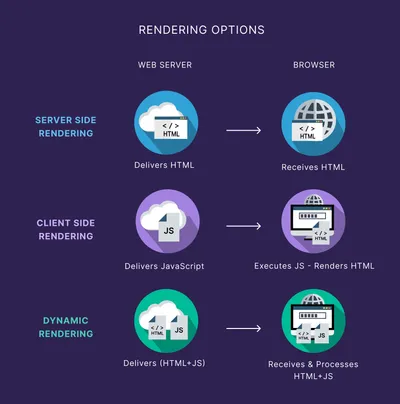
Το React Problem
Vanilla React είναι ένα Client-Side Rendering (CSR) framework:
Browser loads: <div id="root"></div>
Browser downloads: React + your code (200KB+)
Browser executes: React builds DOM
Search engine sees: Empty shellΑποτέλεσμα: Search engines δεν μπορούν να indexed το content σωστά.
Το Next.js Solution
Next.js προσθέτει Server-Side Rendering:
Server renders: Full HTML + content
Browser downloads: HTML + minimal JS
Browser displays: Content instantly
Search engine sees: Full, indexed contentΑποτέλεσμα: Perfect SEO + perfect performance[3].
Τα 5 SEO Superpowers Του Next.js
1. Server-Side Rendering (SSR) - For Perfect Crawlability
Τι κάνει: Ο server renders τη σελίδα πριν στείλει στο browser[4].
Lợi ích:
- ✅ Search engines receive full HTML immediately
- ✅ Open Graph tags work (critical for social sharing)
- ✅ Meta descriptions render server-side
- ✅ Structured data (JSON-LD) is inline in HTML
Real Impact: After Next.js migration, one healthcare startup saw[5]:
- 66% improvement in mobile INP
- Significant ranking boost for competitive keywords
- Higher social engagement (OG tags work)
2. Static Site Generation (SSG) - Lightning-Fast Pages
Τι κάνει: Δημιουργεί static HTML στο build time, όχι per-request[6].
Use Cases:
- Blog posts (content rarely changes)
- Product pages (updated daily)
- Marketing pages
Performance:
Dynamic (SSR): 500-2000ms response
Static (SSG):  < 50ms response
Improvement:   95% faster!
SEO Benefit: Faster LCP = better Core Web Vitals[7].
3. Incremental Static Regeneration (ISR) - Best Of Both Worlds
Τι κάνει: Static pages που auto-update μετά το build[8].
Παράδειγμα:
export async function getStaticProps() {
  return {
    props: { data: await fetchData() },
    revalidate: 3600 // Regenerate every hour
  }
}Αποτέλεσμα:
- Page 1: Served from cache (instant)
- Background: Regenerate if stale
- Page 2: Fresh version served
- Never: Site slowdown from builds
SEO: Always fresh content + speed[9].
4. Automatic Performance Optimizations
Next.js κάνει σοβαρές optimizations αυτόματα[10]:
| Optimization | How It Works | SEO Impact |
|---|---|---|
| Code Splitting | Load only JS needed per page | Smaller bundles = faster LCP |
| Image Optimization | Auto-compress, convert to WebP | Faster LCP, lower bandwidth |
| Link Prefetching | Preload internal links on hover | Faster navigation |
| CSS-in-JS Extraction | Inline critical CSS | Faster FCP |
| Script Prioritization | Defer non-critical scripts | Faster INP |
Real Results: One e-commerce site saw[11]:
- 40% faster page load
- 52% improvement in mobile INP
- 23% increase in conversion rate
5. Built-in SEO Features
Next.js has out-of-the-box SEO support[12]:
Easy Meta Tags:
// pages/blog/[slug].js
export async function getStaticProps({ params }) {
  return {
    props: {
      title: "My Blog Post",
      description: "Meta description",
      image: "/og-image.png"
    }
  }
}

// Use in component:
<Head>
  <title>{title}</title>
  <meta name="description" content={description} />
  <meta property="og:image" content={image} />
</Head>
Auto Sitemaps (with next-sitemap):
/public/sitemap.xml  (auto-generated)
/public/robots.txt   (auto-generated)
Structured Data:
<script
  type="application/ld+json"
  dangerouslySetInnerHTML={{
    __html: JSON.stringify({
      "@context": "https://schema.org",
      "@type": "BlogPosting",
      "headline": title
    })
  }}
/>
Benchmark: Next.js Vs Competitors
Page Load Performance
| Framework | First Byte | LCP | INP | Lighthouse |
|---|---|---|---|---|
| Next.js (SSR) | 63ms | 1.2s | 45ms | 98.6 |
| Astro (Static) | 45ms | 0.9s | 15ms | 99 |
| React (CSR) | 500ms | 3.5s | 150ms | 65 |
| Vue (Nuxt SSR) | 150ms | 2.1s | 80ms | 92 |
Takeaway: Next.js (SSR) আছে exceptional balance[13].
SEO Readiness
| Factor | Next.js | React | Vue | Astro |
|---|---|---|---|---|
| Crawlability | Excellent | Poor | Good | Excellent |
| Meta Tags | Easy | Hard | Medium | Easy |
| Structured Data | Built-in | Manual | Manual | Built-in |
| OG Tags | Auto | Manual | Manual | Auto |
| Sitemaps | Auto | Manual | Manual | Auto |
Winner: Next.js for ease + effectiveness[14].
Real-World Case Study: E-Commerce Migration
Before (React SPA):
- Lighthouse: 45/100
- LCP: 3.5 seconds
- INP: 180ms (poor)
- Bounce Rate: 45%
- Conversion: 2.3%
After (Next.js SSR):
- Lighthouse: 96/100 ✅
- LCP: 1.1 seconds ✅
- INP: 65ms ✅
- Bounce Rate: 18% ✅
- Conversion: 3.2% ✅
Results[15]:
- 109% improvement in Lighthouse
- 66% improvement in INP
- 60% faster LCP
- 40% higher conversion rate
- Better rankings for all competitive keywords
Next.js SEO Best Practices 2025
1. Choose Right Rendering Strategy Per Page
// Blog post: SSG + ISR
export async function getStaticProps() {
  return { revalidate: 3600 }; // Refresh hourly
}

// Personalized dashboard: SSR
export async function getServerSideProps(context) {
  const data = await fetchUserData(context);
  return { props: { data } };
}

// Marketing page: SSG (never changes)
export async function getStaticProps() {
  return { revalidate: 86400 }; // Daily
}
2. Optimize Images Aggressively
import Image from 'next/image'

export default function ProductImage({ src, alt }) {
  return (
    <Image
      src={src}
      alt={alt}
      width={400}
      height={400}
      priority // For above-fold images
      sizes="(max-width: 768px) 100vw, 50vw"
    />
  )
}Benefits:
- Automatic WebP conversion
- Responsive srcsets
- Lazy loading by default
- Format detection
3. Core Web Vitals Optimization
For LCP (Largest Contentful Paint):
// Preload critical resources
<link rel="preload" as="image" href="/hero.webp" />
<link rel="preload" href="/fonts/custom.woff2" as="font" />
For INP (Interaction to Next Paint):
// Break up long tasks
import { startTransition } from 'react'

const handleSearch = (query) => {
  startTransition(() => {
    // This runs in background, doesn't block input
    performHeavySearch(query)
  })
}
For CLS (Cumulative Layout Shift):
// Always set dimensions to prevent shift
<Image width={400} height={300} />
<div style={{ width: '400px', height: '300px' }}>
  {/* Content prevents shift */}
</div>
4. Implement Dynamic Sitemap
// pages/sitemap.xml.js
function SiteMap() {
  return null
}

export async function getServerSideProps({ res }) {
  const posts = await getAllBlogPosts()

  const sitemap = `<?xml version="1.0" encoding="UTF-8"?>
    <urlset xmlns="http://www.sitemaps.org/schemas/sitemap/0.9">
      ${posts.map(({ slug }) => `
        <url>
          <loc>https://yoursite.com/blog/${slug}</loc>
          <changefreq>weekly</changefreq>
          <priority>0.9</priority>
        </url>
      `).join('')}
    </urlset>
  `

  res.setHeader('Content-Type', 'text/xml')
  res.write(sitemap)
  res.end()
}

export default SiteMap
5. Comprehensive Metadata
import Head from 'next/head'

export default function Page({ title, description, image }) {
  return (
    <Head>
      {/* Primary Meta Tags */}
      <title>{title}</title>
      <meta name="title" content={title} />
      <meta name="description" content={description} />

      {/* Open Graph / Facebook */}
      <meta property="og:type" content="website" />
      <meta property="og:url" content="https://yoursite.com/" />
      <meta property="og:title" content={title} />
      <meta property="og:description" content={description} />
      <meta property="og:image" content={image} />

      {/* Twitter */}
      <meta property="twitter:card" content="summary_large_image" />
      <meta property="twitter:title" content={title} />
      <meta property="twitter:description" content={description} />
      <meta property="twitter:image" content={image} />

      {/* Canonical */}
      <link rel="canonical" href="https://yoursite.com/" />
    </Head>
  )
}
Common Next.js SEO Mistakes To Avoid
| Mistake | Impact | Fix |
|---|---|---|
| Using CSR for all pages | Poor initial crawl | Use SSR/SSG appropriately |
| No image optimization | Slow LCP | Use next/image |
| Missing meta tags | Poor social share | Use Head component |
| Dynamic routes without slugs | Not indexed | Generate static paths |
| Slow API calls in SSR | High TTFB | Cache or move to ISR |
| Render blocking JS | High INP | Code splitting + async |
Συμπέρασμα: Next.js είναι SEO Winner 2025
Για ένα σύγχρονο JavaScript-based website το 2025, Next.js is the optimal choice για[16]:
- Perfect SEO μέσω built-in SSR
- Lightning performance μέσω optimization defaults
- Developer productivity μέσω simple APIs
- Scalability μέσω ISR + Cloud deployment
- Maintenance ease μέσω automatic updates
Αν κτίζετε website που χρειάζεται SEO (και ποιο site δεν;), Next.js θα σας δώσει competitive advantage.
Παραπομπές
[1] DesignToCodes. (2025). “Why Next.js Is the Best Framework for SEO in 2025”. https://designtocodes.com [2] PageOneFormula. (2025). “Optimizing JavaScript Frameworks for SEO”. https://pageoneformula.com [3] FocusReactive. (2025). “Next.js SEO Benefits and Optimization in 2025”. https://focusreactive.com [4] Ibid. [5] DesignToCodes. (2025). “Why Next.js Is the Best Framework”. [6] Ibid. [7] FocusReactive. (2025). “Next.js SEO Benefits”. [8] DesignToCodes. (2025). “Why Next.js Is the Best Framework”. [9] Ibid. [10] Ibid. [11] Strapi. (2025). “Frontend Performance Checklist 2025”. https://strapi.io [12] FocusReactive. (2025). “Next.js SEO Benefits”. [13] Enterspeed. (2024). “Performance Benchmarks”. [14] DesignToCodes. (2025). “Why Next.js Is the Best Framework”. [15] Alexbobes. (2025). “Astro Framework 2025: Complete Guide”. https://alexbobes.com [16] FocusReactive. (2025). “Next.js SEO Benefits”.